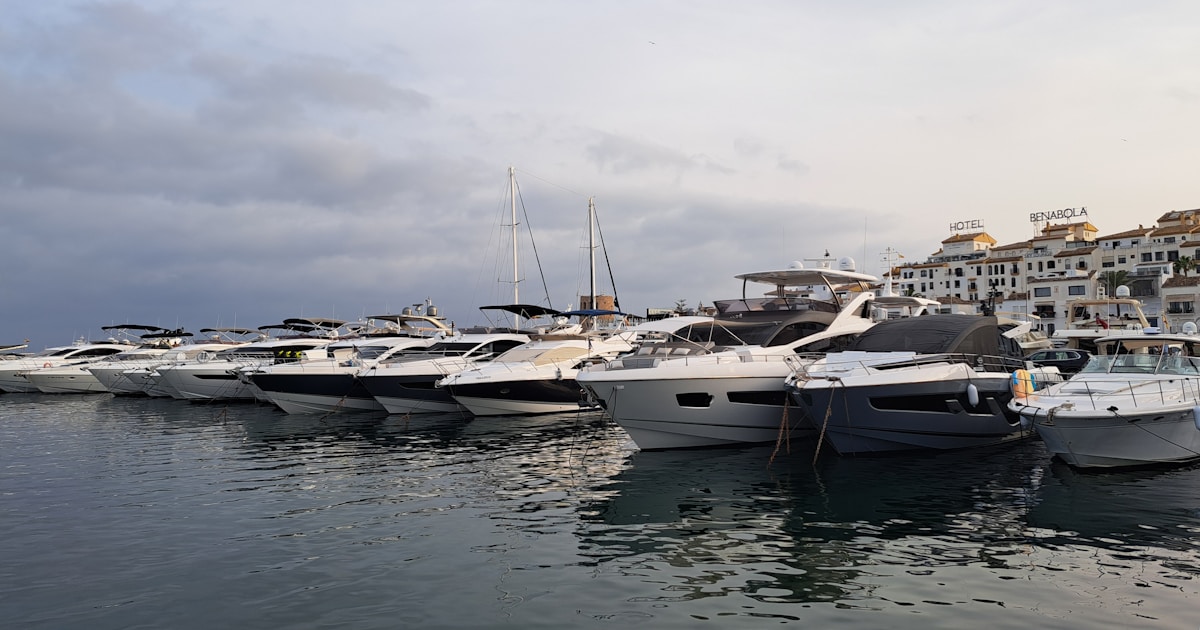
Canadian buyers represent one of the fastest-growing demographics on the Costa del Sol — particularly Albertans, BC residents and Ontarians escaping Canadian winters and Canadian housing-cost inflation, plus Quebec retirees drawn by linguistic affinity with Mediterranean Europe. Spain doesn’t make it complicated for Canadians to buy. But the tax interaction between Spain and Canada — particularly around RRSP/TFSA, currency planning, and the timing of any future tax-residency shift — needs care. This is the working 2026 guide for Canadian residents buying Marbella, Estepona, Mijas or Benahavís property.
Canada-Spain Double Taxation Convention — what it actually does
The Convention between Canada and Spain for the Avoidance of Double Taxation (in force since 1976, with the 2014 protocol updating select provisions) governs which country has the primary right to tax which type of income.
| Income type | Primary taxing right | Mechanic |
|---|---|---|
| Spanish real estate income (rentals) | Spain (Article 6) | Canada gives Foreign Tax Credit for Spanish IRNR paid |
| Capital gains on Spanish real estate | Spain (Article 13) | Canada gives FTC for Spanish CGT paid |
| Spanish state pension to Canadian resident | Canada (Article 18) | Spain doesn’t tax it |
| Canadian state pension to Spanish resident | Canada (Article 18, residence-based limited) | Limited Spanish tax |
| Dividends | Both, with treaty cap | Treaty cap of 15% on Canadian dividends to Spanish residents |
| Interest | Both, with treaty cap | Treaty cap of 15% |
The practical takeaway for a Canadian buying Spanish property: Spain taxes the property-related income and gains first; Canada gives credit. You file in both countries, but you don’t pay twice.
What you’ll pay on purchase
For a typical Costa del Sol acquisition, the breakdown:
Resale property (most common)
- ITP (Property Transfer Tax): 7% in Andalucía (rate set by autonomous community)
- Notary fees: 0.3–0.5% of price (regulated tariff with sliding scale)
- Registry fees: 0.2–0.3%
- Lawyer fees: 1.0–1.2% (typical for full conveyancing service)
- Mortgage costs (if applicable): 1–2% of mortgage amount
Total acquisition cost on top of price: ~8.5–10%.
New-build from developer
- IVA (VAT): 10% (residential) or 21% (commercial)
- AJD (Stamp Duty): 1.2% in Andalucía
- Notary, registry, lawyer: same as above
- Possible developer-level taxes already in price: typically already passed through
Total acquisition cost: ~12–13% for residential new-build.
Documents you’ll need
- NIE number (mandatory) — see our NIE guide. Canadians can apply at the Spanish consulate in Toronto, Montreal, Vancouver, or in person in Spain
- Canadian passport with at least 12 months remaining
- Spanish bank account for the wire transfer (IBAN required for buyer’s payment to vendor)
- Power of attorney to your Spanish lawyer if signing remotely (notarised in Canada with Hague Apostille — an extra 2–4 weeks lead time)
Currency planning — Canadian-specific traps
The CAD/EUR rate is unstable on a quarterly horizon and material on Costa del Sol purchase amounts. A 2% currency move on a €600K property is €12,000 — bigger than most legal-fee budgets.
Three Canadian-specific points:
1. Don’t use your retail Canadian bank for the FX
Canadian retail banks typically charge 1.5–2.5% spread on EUR conversions plus wire fees. On €600K, that’s €9,000–€15,000 in friction.
Better routes for Canadian buyers:
- Specialist FX brokers (OFX, Wise Business, Moneycorp) — 0.4–0.7% spread, with forward-contract products to lock rates 6–12 months ahead
- Norbert’s Gambit through Interactive Brokers — institutional spreads for self-directed buyers (sub-0.1%)
- Spanish bank with multi-currency facilities — useful only if banking in Spain anyway
2. Forward-contract the conversion if you’ve signed a contrato de arras
The contrato de arras (10% deposit private contract) typically gives 30–60 days to completion. That’s exactly the window where currency moves matter. Lock the EUR forward on signing the arras, not on completion day. Specialist FX brokers price 1–3 month forwards at near-spot rates.
3. Open Spanish account before the contrato de arras, not after
Spanish banks need 4–8 weeks to onboard non-residents in 2026 (full KYC + tax-residency cert from Canada + Catastro link). Trying to do this concurrently with the arras-to-completion window creates avoidable stress.
RRSP and TFSA — the awkward conversation
Canadian retirement and savings vehicles don’t have Spanish equivalents and aren’t recognised by the Spanish tax system. This matters in two scenarios:
You stay Canadian-resident, buy a holiday property
Your RRSP and TFSA carry on as normal under Canadian rules. The Spanish property is a separate asset taxed under IRNR (rental income, no rental income but you owe imputed-rent tax of ~0.4% of cadastral value annually, plus IBI council tax).
If you withdraw RRSP to fund the purchase, Canadian withholding tax of 10–30% applies depending on amount. Better to draw from non-registered accounts or TFSA where possible.
You become Spanish tax-resident later
Spending more than 183 days in Spain in a calendar year makes you Spanish tax-resident — at which point Spain taxes worldwide income and gains. RRSP and TFSA stop being tax-shelters from Spain’s perspective:
- RRSP: still grows tax-deferred under the DTA’s pension-savings recognition for Canadian-source pensions — but withdrawals fully taxable in Spain at savings-rate (19–30%) less FTC for Canadian withholding. You’re not double-taxed but you lose the deferral benefit on income arising while resident in Spain.
- TFSA: loses tax-free status entirely from Spain’s view. Capital gains and dividends inside the TFSA become Spanish-taxable from your Spanish residency start date. We see Canadian retirees who weren’t warned about this lose 5-figure sums avoidably.
Pre-residency planning (12–18 months before any Spanish residency move) is where this is solvable: realise TFSA gains pre-move, restructure RRSP withdrawals on a Canadian-resident basis, and time the Spanish residency start date around the Canadian fiscal year-end (December 31).
Inheritance — Canada vs Spain interaction
Canada has no federal inheritance tax. Provinces with probate fees (Ontario ~1.5%, BC ~1.4%) have a small charge but no estate-level tax. The federal tax on death is the deemed disposition — the deceased is treated as having sold all capital property at fair market value, triggering capital gains on the final T1 return.
Spain’s inheritance tax (ISD) applies to:
- All Spanish-situs assets, regardless of heir’s residence
- Worldwide assets where the heir is Spanish tax-resident
For a Canadian heir of a Costa del Sol property:
- ISD is calculated on the Spanish property
- Andalucía’s 99% bonification applies if the heir is a close-family relative (spouse, children, parents, grandparents) regardless of nationality — see our Andalucía inheritance tax guide
- The deemed-disposition Canadian capital gain still applies on the deceased’s terminal Canadian return
- Canada gives credit on the deceased’s terminal return for any ISD paid by the estate, under a treaty article — but the mechanics are complex and warrant CPA + Spanish lawyer coordination
For a Quebec resident with a Costa del Sol property, the professio iuris under EU Regulation 650/2012 lets the testator elect Quebec civil law to govern Spanish succession — preserving Quebec inheritance flexibility. This needs to be drafted into the Spanish testamento — see our cross-border will guide.
Residency pathways — if you’re considering more than a holiday home
Three main routes for Canadians wanting to spend significant time in Spain:
| Route | Best for | Days in Spain |
|---|---|---|
| Schengen tourist | Up to 90 days in any 180 | None registered |
| Non-Lucrative Visa | Retirees, passive income > €28.8K/yr | Substantial — see NLV guide |
| Digital Nomad Visa | Remote workers earning ≥ €2.5K/mo | Substantial, Beckham Law option available |
The Schengen 90-day rule trips up Canadian visitors most often: it’s a cumulative 90 days across ALL Schengen countries, not just Spain. A trip to Paris counts. Track carefully.
For Canadians considering full relocation, the Non-Lucrative Visa is usually the cleaner path — pre-residency tax planning (TFSA realisation, RRSP timing) is what makes or breaks the financial outcome.
Common pitfalls Canadian buyers hit
- Wiring CAD direct to Spanish vendor account — banks reject it; needs EUR. FX broker required.
- NIE applied for at Spanish police station once already in Spain on a tourist visa — works but slower than consular pre-application from Canada
- TFSA used to fund purchase without tax-residency planning — loses tax-free status on later Spanish residency
- Quebec-resident testator with no professio iuris in Spanish will — defaults to Spanish forced-heirship rules, conflicts with Quebec civil-law expectations
- Renting out the property informally to family/friends without IRNR Modelo 210 — tax authority cross-checks utility bills against Catastro
Related articles
- Buying Property in Spain — Complete Foreign Buyer Guide
- NIE Number Spain — Expat Application Guide
- Spain Property Taxes for Foreign Owners
- Capital Gains Tax — Non-Resident Property Sale
- Andalucía Inheritance Tax — 99% Bonification Explained
- Cross-Border Spanish Will + EU 650/2012
If you’re a Canadian resident — Vancouver, Toronto, Calgary, Montreal, or anywhere else — considering a Costa del Sol purchase, book a free consultation. The Canada-Spain interaction has fewer rough edges than the US one (no FATCA, no PFIC complexity), but it still rewards advance planning. Most Canadian clients engage us 3–6 months before their first Spain trip to look at properties — early enough that the financial and immigration architecture is built before the offer.